Some breakfasts are healthy on paper and miserable in practice. This one is neither. It takes five minutes to assemble, needs no cooking, and tastes like a dessert while delivering enough protein and fibre to keep you steady until lunch. It is also forgiving: adjust the sweetness, change the fruit, make it the night before, and it still works.
The combination is simple — thick Greek yogurt, chia seeds, milk, a little vanilla and berries. The yogurt brings protein and tang, the chia seeds turn the milk into a soft gel and add fibre, and the fruit brings freshness and colour. What makes it worth writing about is the evidence behind the combination, not just the taste.
What You're Actually Making
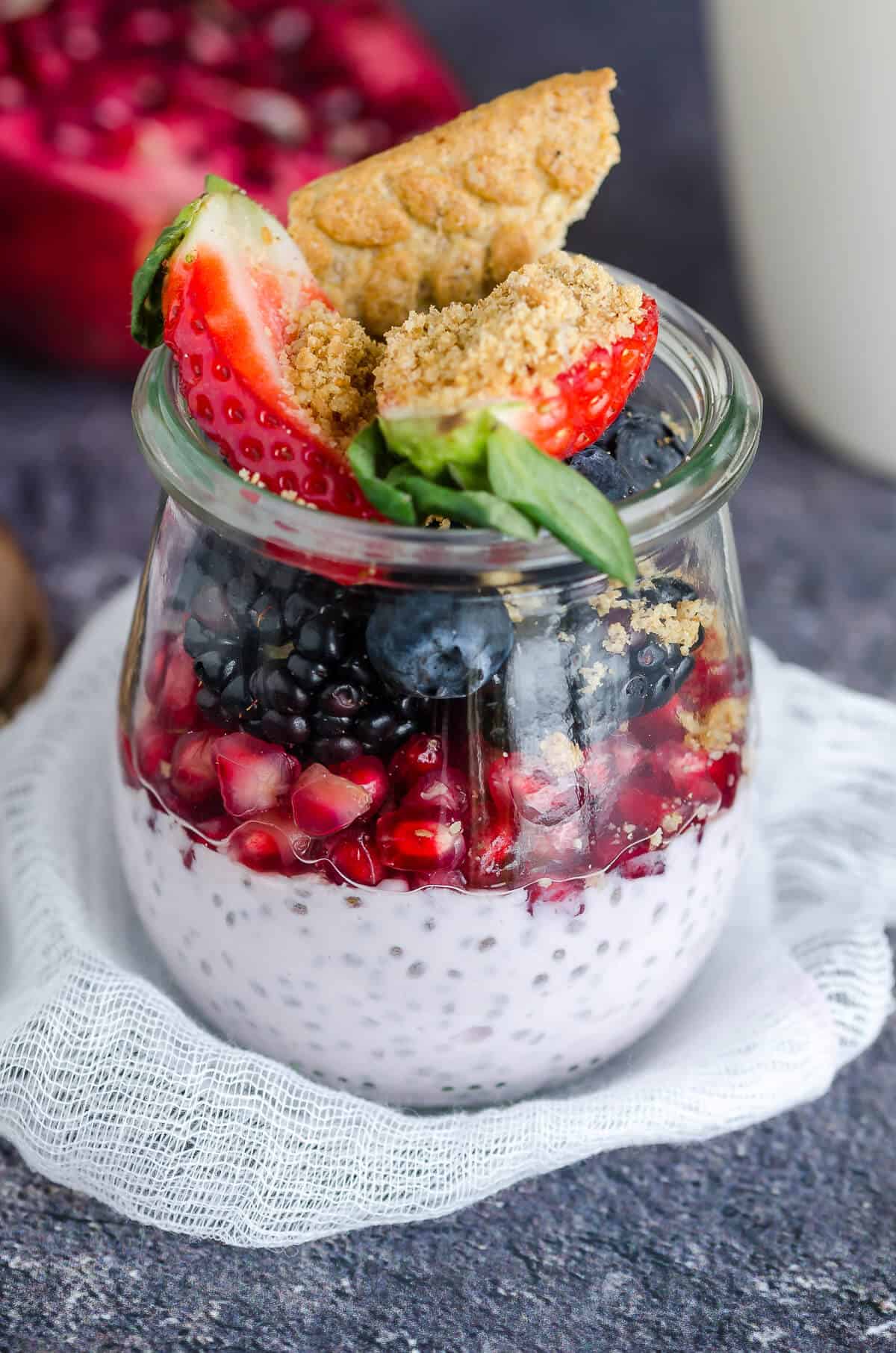
This is a chia pudding with a substantial yogurt base rather than the thin, seed-heavy version many people try once and abandon. The yogurt gives it body and a creamy texture; the chia seeds provide structure and a mild nutty flavour. It is closer to a breakfast bowl than a dessert, and it holds its own in the morning.
Small trials have looked at chia seeds and short-term fullness. A 2017 study by Ayaz and colleagues, available through the National Institutes of Health's archive, found that chia consumed as a mid-morning snack induced short-term satiety in healthy participants. Another study examined satiety and post-meal glucose responses to chia-seed yogurt in overweight adults and reported favourable short-term effects. These are small studies, not proof of weight loss, but they support the practical observation that this breakfast keeps people satisfied.
The Base Recipe
For one generous serving you need: 150 grams of plain Greek yogurt, two tablespoons of chia seeds, 120 millilitres of milk of your choice, half a teaspoon of vanilla extract, a teaspoon of maple syrup or honey, a pinch of salt, and a handful of mixed berries. Frozen berries work when fresh ones are expensive.
Whisk the yogurt, milk, vanilla, sweetener and salt in a jar or bowl. Add the chia seeds and stir thoroughly, then wait five minutes and stir again. This second stir is the step people skip, and it is what prevents clumps. Cover and refrigerate for at least two hours, or overnight. When you wake up, the mixture should be softly set, like a thick panna cotta.
Top with berries just before eating. If you add them the night before, they release juice and turn the top layer pink — harmless, but less appealing. A few nuts or a spoonful of granola add crunch, though they also add calories, so treat them as a choice rather than an obligation.
Why the Second Stir Matters
Chia seeds absorb several times their weight in liquid. When they hit the milk, the outer layer of each seed gels quickly and can form a film around a dry centre. Stirring again after five minutes breaks those clumps and lets every seed hydrate evenly. The result is a smooth pudding instead of a bowl of jelly with dry grains in the middle.
If your pudding is still runny after two hours, you used too little chia or too much milk. Add another teaspoon of seeds, stir, and give it another twenty minutes. If it is too thick, loosen it with a splash of milk. There is no failure state here, only adjustment.
Three Variations Worth Trying
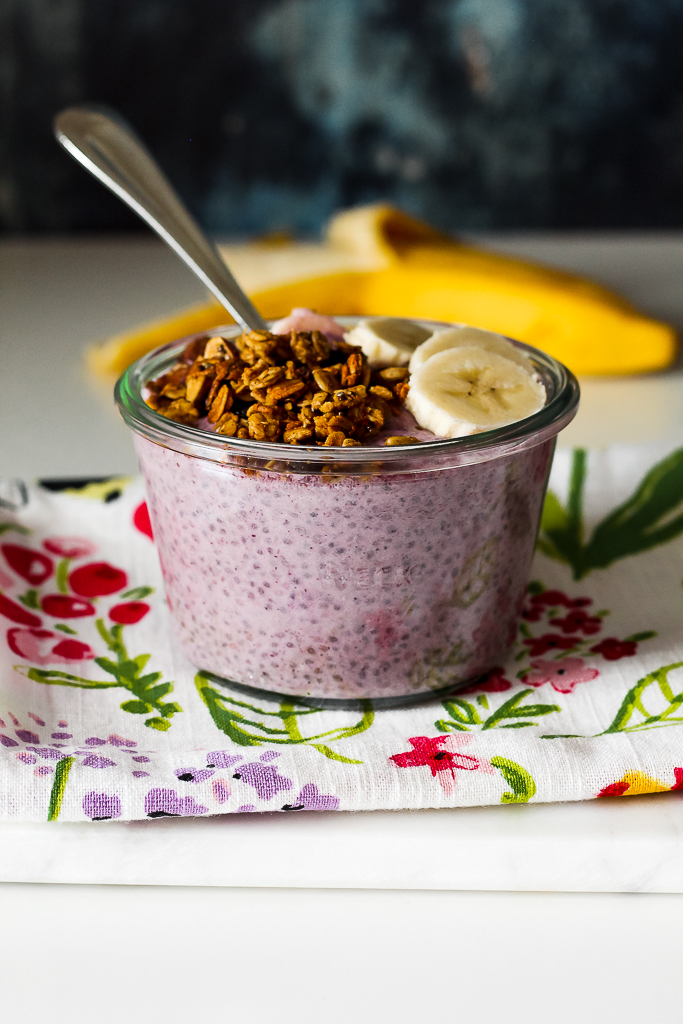
The base is deliberately plain so you can change it. For a berry version, blend a handful of frozen strawberries into the milk before mixing. For a chocolate version, add a teaspoon of cocoa powder and a slightly larger splash of maple syrup; cocoa makes the chia gel darker and more intense. For a lemon version, add a little lemon zest and skip the vanilla — this is especially good in warmer months.
If you tolerate dairy poorly, use a thick plant yogurt made from soy or coconut and a plant milk. The texture will be slightly looser, so add an extra teaspoon of chia. Coconut yogurt brings a distinct flavour that works well with mango and lime.
For readers who prefer a sweeter breakfast, a mashed banana folded into the yogurt before the chia goes in works well and removes the need for added sweetener. Banana also changes the texture, making it softer and more cake-like. This is a good option for anyone who finds plain Greek yogurt too sharp.
Make It Ahead Without Losing Texture
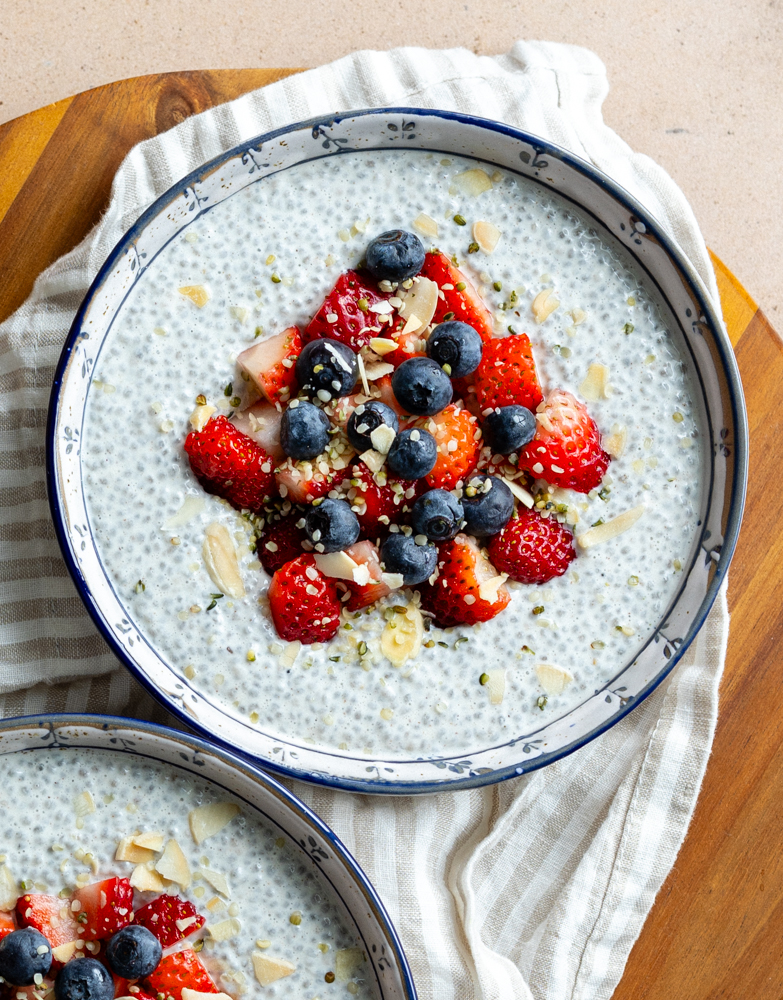
This is a genuinely useful make-ahead breakfast. Assemble two or three jars on Sunday night and they will keep in the refrigerator for up to three days. Keep the toppings separate until you eat; berries, granola and nuts go soft when stored on top of a wet pudding.
Use jars with a wide mouth so you can stir easily and eat comfortably. If you are taking one to work, choose a container with a tight lid and keep it cold until lunch. The pudding does not need reheating and does not separate badly, though a quick stir brings back the original texture.
Freeze only the fruit, not the assembled pudding. Chia gels change structure when frozen and thawed, becoming grainy. Frozen berries on top are fine; they simply thaw while you eat.
What the Nutrition Actually Looks Like
A serving made with 150 grams of plain Greek yogurt, two tablespoons of chia and a small handful of berries typically provides around 300 to 350 calories, roughly 18 to 22 grams of protein, 10 to 12 grams of fibre and a moderate amount of carbohydrate. The exact numbers depend on the yogurt and milk you use.
That balance is why the breakfast works: protein and fibre slow digestion, while the carbohydrate from fruit provides usable energy. Compare it with a typical sweetened cereal breakfast, which often delivers a similar calorie load with far less protein and fibre, and the difference in how you feel by mid-morning becomes understandable.
Chia seeds also contain alpha-linolenic acid, a plant omega-3 fatty acid, along with calcium, magnesium and phosphorus. The amounts are meaningful but not miraculous; the main practical benefits here remain fibre and texture. Do not treat any single breakfast as a treatment for a medical condition.
How This Fits a Women's Nutrition Plan
Breakfast is the meal most often skipped when mornings get busy, and skipping it tends to backfire later in the day. A pudding you prepared the night before removes the decision entirely. You open the refrigerator, take out a jar, and eat something that supports your energy rather than undermining it.
For women who train, the combination of carbohydrate from fruit and protein from yogurt is especially practical. Carbohydrate replenishes glycogen used during early-morning sessions, while protein supports repair. Adding a little extra fruit on training days is a simple adjustment that does not require a separate meal.
For women managing blood sugar fluctuations, the fibre in chia slows the absorption of the carbohydrate in the fruit. That does not make the breakfast a medical intervention, but it does explain why the same breakfast feels steadier than a sweetened cereal or a plain bagel. Pairing food this way is one of the most useful habits in everyday nutrition.
Storage and Food Safety
Keep the assembled pudding refrigerated at or below four degrees Celsius and eat it within three days. If your kitchen is warm, do not leave a jar on the counter while you get ready; return it to the fridge straight away. Use clean jars with tight lids and avoid double-dipping a spoon, since dairy-based foods spoil quickly once contaminated.
If you take a jar to work, pack it with a small ice pack or keep it in a fridge until lunch. A pudding that has been warm for several hours is not worth eating, however good it looks. When in doubt, throw it out — the ingredients are inexpensive compared with the cost of food poisoning.
Common Mistakes
The first mistake is using flavoured yogurt with a large amount of added sugar. Combined with syrup and sweet fruit, the breakfast stops being a balanced meal and becomes a dessert with seeds in it. Plain yogurt plus a small amount of sweetener gives you control.
The second is using too much liquid. Chia thickens dramatically, and a cup of milk with two tablespoons of seeds produces a soup rather than a pudding. Start with less milk and add more after you see the texture.
The third is eating it straight from the refrigerator. The flavour is muted when very cold. Give it five minutes at room temperature and the vanilla and fruit come through more clearly.
Who Should Be Careful
Chia seeds are generally well tolerated, but they are high in fibre. If your usual diet is low in fibre, introduce this breakfast gradually and drink plenty of water; a sudden large increase can cause bloating or discomfort. Anyone with a swallowing difficulty should avoid dry chia and ensure seeds are fully hydrated.
People with diabetes or insulin resistance should account for the carbohydrate in the fruit and any added sweetener, and discuss significant dietary changes with a clinician. This article is educational and is not medical advice.
Getting the Ingredients Right
Chia seeds are usually sold as black or white; both work. Black seeds are more common and slightly more robust in colour. Buy from a supplier with good turnover, because old seeds lose some of their gelling capacity. You can compare current organic chia seeds on Amazon>> and a set of glass meal prep jars>> if you want to make this a weekly habit.
None of this requires expensive equipment. A jar, a spoon and a refrigerator are enough. The point is repeatability: a breakfast you can make without thinking is a breakfast you will actually eat.
A Simple Weekly Rhythm
Make two jars on Sunday, eat one Monday and one Wednesday, then make two more midweek. Keep berries frozen in the freezer and you will never run out. This removes the usual morning decision, which is where most good intentions fail.
If you train in the morning, eat the pudding an hour or two beforehand and see how it sits. Some people prefer a smaller breakfast before exercise and a larger one afterwards. There is no universal answer, and your own experience is more useful than a generic rule.
A Note on Cost and habit
One of the quiet reasons people abandon healthy breakfasts is cost. A carton of quality Greek yogurt and a bag of chia seeds look expensive at the checkout, but the per-serving figure is modest when you divide them across the jars you actually make. Two tablespoons of chia per serving means a small bag lasts for weeks, and a large tub of plain yogurt stretches to five or six breakfasts. The berries are the only genuinely variable expense, and frozen fruit solves that problem for most of the year.
The other reason is habit. A recipe that requires a decision every morning will eventually be skipped, no matter how good it tastes. Put the jars on a specific shelf, keep the spoon in the same place, and attach the task to something you already do — brushing your teeth, making coffee, or emptying the dishwasher. After a fortnight it stops feeling like a choice and becomes part of the morning.
If you get bored, change one element rather than the entire breakfast. Rotate the fruit, add a different spice, or switch from vanilla to lemon zest. The structure stays the same, so the habit survives even when the flavour changes.
The Bottom Line
Greek yogurt chia pudding is a rare example of a healthy breakfast that does not feel like a compromise. Five minutes of work, real evidence behind the ingredients, and enough flexibility to keep it interesting for months. Make it once with the base recipe, then find the variation you actually look forward to eating.
Related guide: Still have questions about texture, dairy-free versions, storage or how much chia is safe? Chia Pudding Questions Answered covers the follow-up questions readers ask most.
Written by Roland Wiredu, health and wellness writer and researcher at Fresh and Fit Living. No medical degree or clinical qualification is claimed. For more evidence-based breakfast ideas, see the chia water guide and the protein guide for women.



0 Comments