Ask ten people what goes wrong with chia pudding and you will get ten different answers. One person swears it needs more seeds, another says the seeds were old, a third has given up entirely because theirs turned into a runny mess with a dry centre. The recipe itself is forgiving, but the questions that follow it are surprisingly consistent. This article answers the ones we hear most often, with the practical detail that the original guide did not have room for.
If you have not made it yet, start with the full Greek yogurt chia pudding guide and then come back here when something does not behave as expected. Everything below assumes you have the basic method: stir seeds into liquid, wait a few minutes, stir again, and let it set in the refrigerator.
Can I make chia pudding without Greek yogurt?

Yes. The yogurt is there for protein, tang and body, not because the pudding cannot set without it. Chia thickens milk on its own. A version made with only milk and seeds will still set, but the result is lighter and less creamy, and it carries far less protein. If you avoid dairy, use a thick plant yogurt made from soy or coconut rather than a thin almond yogurt. Soy yogurt has the closest protein content to Greek yogurt; coconut yogurt is rich but contains little protein and a distinct flavour that pairs well with mango or lime.
Plant yogurts are usually looser than strained dairy yogurt, so add an extra teaspoon of chia seeds per serving and give the mixture an extra thirty minutes in the refrigerator. If you want the same protein without dairy, a spoonful of silken tofu blended into the milk works surprisingly well and is almost neutral in flavour.
The trade-off is worth understanding. A dairy-free pudding made with almond milk and coconut yogurt might provide five to eight grams of protein, against eighteen to twenty-two in the Greek yogurt version. That changes how the breakfast feels an hour later. If you are eating it before a long morning, add a side of nuts or choose soy to close the gap.
Sweetness is another place where people accidentally break the recipe. Flavoured plant yogurts often contain as much sugar as dessert, and once you add syrup and fruit the breakfast stops being a balanced meal. Plain yogurt, a little vanilla and fruit you choose yourself gives you control over both flavour and nutrition.
Why is my chia pudding runny or lumpy?
Almost every texture problem comes down to one of three causes: the ratio, the second stir, or the age of the seeds. Chia seeds absorb several times their weight in liquid. Two tablespoons to 120 millilitres of milk is a reliable starting point. If you pour in a full cup of milk with the same two tablespoons, you have made a drink rather than a pudding. Start with less liquid than you think you need and add more after the gel forms.
Lumps appear when the outer layer of a seed gels on contact with liquid and seals a dry centre inside. The first stir distributes the seeds; the second stir, five minutes later, breaks those soft clumps open. Skipping it is the single most common mistake. If your pudding has dry white grains floating in a smooth gel, this is almost certainly the cause.
Old seeds are the quiet culprit. Chia keeps well, but a bag that has sat open in a warm cupboard for a year loses some of its gelling power. If a new batch behaves differently from an old one, the seeds are usually the reason. Compare current chia seeds on Amazon from a supplier with steady turnover and store the bag sealed and cool.
There is also a timing factor. Two hours is the minimum; four hours gives a much firmer set, and overnight is best. If you check after ninety minutes and see a loose mixture, give it another half hour before changing anything. A quick stir after it has fully set will also even out a layer that formed on top.
How long does it keep, and can I freeze it?

Assembled pudding keeps in glass meal prep jars in the refrigerator for up to three days. Beyond that the texture starts to deteriorate and the fruit you added on top will have turned soft and watery. Keep toppings separate and add them just before eating: berries, granola and nuts all go limp on a wet surface, and granola loses the crunch that makes the breakfast enjoyable.
Food safety matters more than most people expect with a dairy-based breakfast. Keep the jar at or below four degrees Celsius, return it to the fridge straight away rather than leaving it on the counter while you get ready, and use a clean spoon each time. A jar that has been warm for several hours is not worth eating, however good it looks.
Freezing the assembled pudding is not recommended. Chia gel changes structure when it freezes and thaws, becoming grainy and slightly separated. Frozen fruit, on the other hand, is fine: add strawberries or blueberries straight from the freezer and they thaw as you eat. Some people blend frozen fruit into the milk before mixing, which produces a softer, ice-cream-like version worth trying in hot weather.
If you are preparing breakfasts for the week, make two or three jars on Sunday and another two on Wednesday. That stays inside the three-day window without sacrificing texture, and it removes the morning decision that derails most healthy habits.
How much chia is safe in a day?
Two tablespoons, roughly twenty-four grams, is a common serving in recipes and is well within what most adults eat. Many people start with one tablespoon and work up. The reason to increase gradually is fibre: chia is exceptionally high in it, and a sudden large jump in a diet that is usually low in fibre can cause bloating, cramping or loose stools. Drink plenty of water alongside it, because fibre needs fluid to move through the digestive system comfortably.
There is no official daily requirement for chia. The useful guide is your own tolerance. If one tablespoon a day feels fine and two causes discomfort, stay at one. If you take medication that needs to be absorbed on an empty stomach, take it at a different time from a high-fibre breakfast and ask your pharmacist if you are unsure.
Children, pregnant women and anyone with a chronic digestive condition should be more cautious, not because chia is dangerous but because the fibre load is substantial relative to body size. A small amount mixed into a larger meal is a sensible approach. Anyone with a swallowing difficulty should avoid dry chia entirely and make sure every seed is fully hydrated before eating.
Is chia pudding actually good for weight loss and blood sugar?
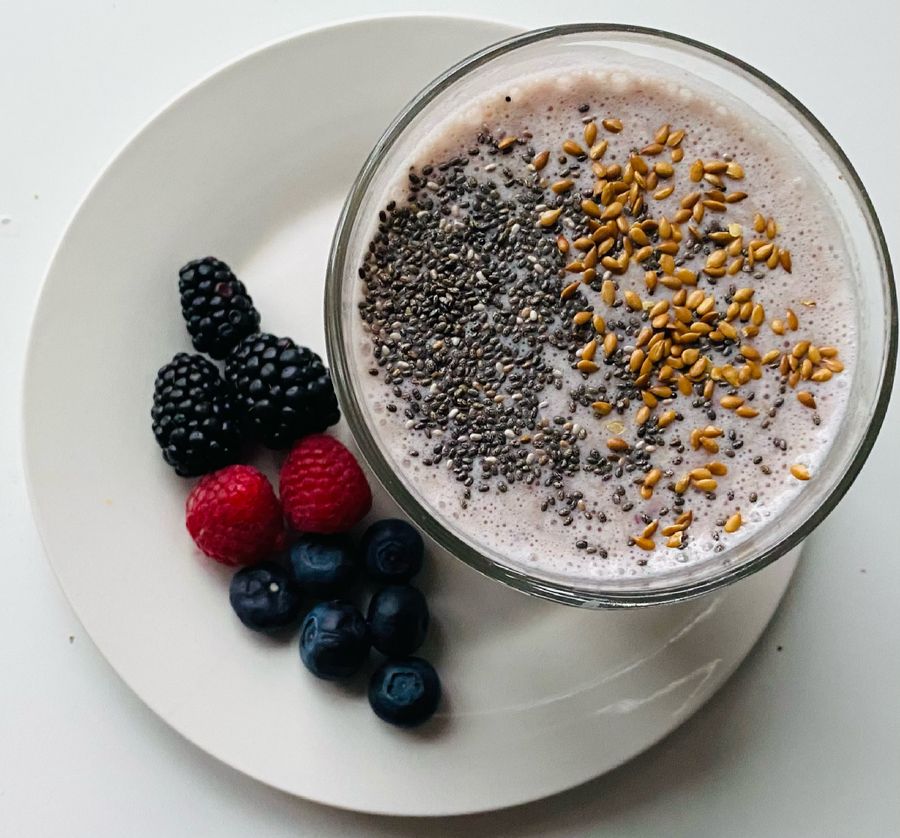
It can be a useful tool, but it is not a treatment. Small trials have reported that chia consumed as a mid-morning snack produced short-term satiety in healthy adults, and a study of chia-seed yogurt in overweight adults found favourable effects on fullness and post-meal glucose. These are small studies with short time frames. They support the practical observation that the breakfast keeps people satisfied; they do not prove that it causes weight loss on its own.
What makes the combination work in real life is simpler. Protein from yogurt and fibre from chia slow digestion, while fruit provides carbohydrate for energy. A breakfast with that balance tends to reduce the urge to snack mid-morning. Compare it with a sweetened cereal, which delivers a similar number of calories with far less protein and fibre, and the difference in how you feel by eleven o'clock becomes easy to understand.
For anyone watching blood sugar, the fibre in chia slows the absorption of the sugar in the fruit. That is a mechanical effect, not a medical one. Portion size still matters, and added syrup or a large handful of dried fruit can cancel the advantage. If you have diabetes or insulin resistance, count the carbohydrate in the fruit and any sweetener, and discuss major dietary changes with your clinician.
The honest summary is that this breakfast helps because it is filling and easy to repeat. Repeatability is underrated. A plan you can follow for months will do more than a perfect plan you abandon in a week.
Which milk works best?
Whole dairy milk makes the creamiest pudding and adds a little protein. Semi-skimmed works just as well with fewer calories. Almond milk is light and slightly nutty but thin, so use less of it or add an extra teaspoon of seeds. Oat milk is naturally sweeter and thicker, which suits a cocoa version. Coconut milk from a can is very rich and best reserved for a dessert-like treat rather than a daily breakfast.
Soy milk deserves a mention because it brings around seven to nine grams of protein per cup, closer to dairy than most plant options. If you are building a dairy-free breakfast that still supports muscle maintenance, soy milk plus soy yogurt is the strongest combination.
Whatever you choose, check the label for added sugar. Unsweetened versions give you control over the final flavour. You can always add a little maple syrup or honey; you cannot easily take sugar out once it is in the jar.
Do chia seeds have to be soaked, or can I eat them dry?
They should be soaked. Dry chia seeds absorb liquid rapidly and swell, and there are published case reports of oesophageal obstruction in people who swallowed a spoonful of dry seeds followed by insufficient water. That is rare, but it is avoidable. Mix seeds into a liquid and give them time to hydrate, or sprinkle them onto wet food such as yogurt where they can absorb moisture.
This is also why swallowing a spoonful of chia and then drinking a small glass of water is a bad idea. The seeds can expand before the water reaches them. If you want the quick version, stir a tablespoon into a full glass of water or milk, wait ten minutes, and then drink it as a chia water rather than eating the seeds straight.
Ground chia seeds hydrate faster and are easier for some people to digest, though they also thicken more aggressively. If you switch from whole to ground, reduce the quantity slightly at first and watch the texture. Whole seeds are fine for most people and have a pleasant slight crunch even after soaking.
A few quicker answers
Can I use flax instead? Ground flax thickens similarly but produces a denser, slightly bitter result. It also needs to be ground to be useful; whole flax passes through undigested. If you swap, use a little less and expect a nuttier flavour.
Can I eat it as a snack rather than breakfast? Yes. A small jar works well in the afternoon, especially with a little extra protein. The same logic applies: protein plus fibre is what keeps you steady.
Should I eat it before or after training? For an early session, a smaller portion an hour beforehand sits better for most people, with a larger breakfast afterwards. For later training, the full serving two hours before is usually comfortable. Your own experience is a better guide than any universal rule.
Can I add protein powder? You can, though it thickens the mixture further and can make it chalky. Add the powder with the milk, increase the liquid slightly, and give it longer to set. A vanilla or unflavoured powder works better than a strong chocolate one.
Is it expensive? Per serving, no. Chia seeds go a long way and plain yogurt stretches across several breakfasts. Frozen fruit keeps the variable cost down. The only genuinely expensive version is one built on premium single-serving cups.
Where to go next
If this has answered your question, the next step is the complete recipe with the exact quantities, the make-ahead schedule and the nutrition breakdown: read the full Greek yogurt chia pudding guide. It covers the base method in detail and includes the variations for berry, chocolate and lemon versions.
For the wider context on the ingredients, our chia water guide explains what the research says about fibre and fullness, and the protein guide for women explains how much protein different breakfasts provide. Together they give you the reasoning behind the recipe rather than just the steps.
Written by Roland Wiredu, health and wellness writer and researcher at Fresh and Fit Living. No medical degree or clinical qualification is claimed. This article is educational and is not medical advice.



0 Comments