Iron is the supplement women are most often told they need and least often helped to understand. The advice usually stops at 'take an iron supplement', which leaves the useful questions unanswered: which form, what dose, for how long, and what a blood result actually means when you get one. This article works through those questions in order, with the evidence kept separate from the marketing.
Nothing here is a diagnosis or a treatment plan. Iron deficiency can have causes that need proper medical investigation, and heavy bleeding, fatigue or breathlessness deserve a clinician's attention. What follows is the background that makes that conversation more useful.
Why iron is a different kind of supplement
Most supplements are optional additions to a decent diet. Iron is different because the body has no easy way to get rid of excess, and because the consequences of too little and too much are both real. That is why 'more is better' is a particularly bad rule here.
Iron has a narrow useful window. It is needed to make haemoglobin, the protein in red blood cells that carries oxygen, and it is involved in energy metabolism and immune function. But free iron is also chemically reactive, which is why the body binds it tightly to transport and storage proteins and why randomly adding more is not harmless.
The scale of the issue is well documented. The World Health Organization identifies iron deficiency as the most common nutritional deficiency worldwide, with women of reproductive age among the groups most affected. Menstrual blood loss is the usual reason; pregnancy, restricted diets, and conditions that reduce absorption add to it.
Because the cause matters so much, supplementing blindly can mask a problem rather than solve it. A blood test is not a bureaucratic hurdle — it is the thing that tells you whether iron is actually low, how low, and whether the picture fits your symptoms.
What ferritin actually measures

When someone says their iron is low, they may mean one of several things. Haemoglobin measures the oxygen-carrying protein in red blood cells. Serum iron measures iron circulating in the blood at that moment, which changes with recent food. Ferritin reflects stored iron, and it is usually the most informative single number for someone who feels tired but is not obviously anaemic.
There is a catch that catches out both patients and practitioners: ferritin rises during inflammation. It is an acute-phase reactant, so an infection, an injury, or a chronic inflammatory condition can produce a normal or high ferritin while stored iron is actually low. If you are unwell when the blood is taken, tell the clinician — the result may need interpreting alongside other markers such as transferrin saturation and C-reactive protein.
Reference ranges also differ between laboratories, and different organisations use different thresholds for when to investigate. A result marked 'normal' on the lab form is not automatically optimal for a symptomatic person, and a result just below the range is not automatically a diagnosis. Ask for the actual numbers and what they mean in your context.
Re-testing matters. Ferritin responds slowly to supplementation, so checking after four to eight weeks is more informative than checking after two. Repeated testing also shows whether the chosen dose is doing anything, which is more useful than guessing and continuing indefinitely.
A single tube of blood in a laboratory holder is a good visual reminder of the point: the decision to supplement should start with a measurement, not with a symptom and a search result.
Food first: what an iron-rich day looks like
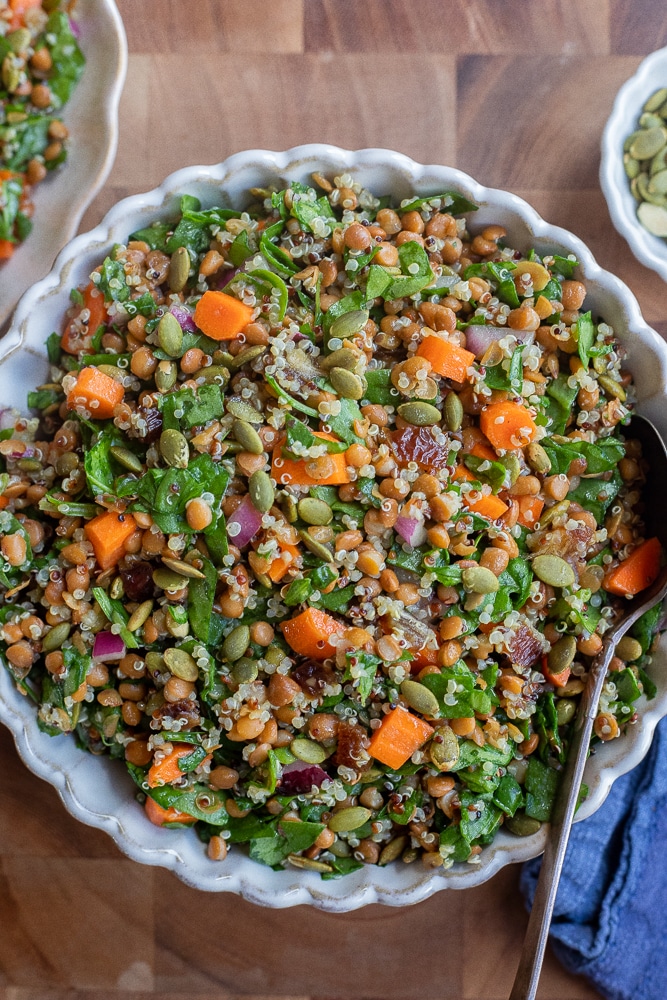
Before reaching for a bottle, it is worth knowing what food can do. There are two forms of dietary iron. Haem iron comes from animal sources — red meat, poultry and fish — and is absorbed relatively efficiently. Non-haem iron comes from plants such as lentils, beans, tofu, spinach, quinoa and fortified cereals, and its absorption varies far more depending on what else is on the plate.
This variability is why a plate of lentils and spinach can be genuinely useful even though the number on a nutrition label looks modest. Pairing plant iron with a source of vitamin C — peppers, citrus, tomatoes, berries — improves absorption significantly. A squeeze of lemon over a lentil salad is not a folk remedy; it is a practical application of a well-studied effect.
Conversely, tea and coffee drunk with a meal reduce non-haem iron absorption, mainly because of their polyphenol content. Calcium can also compete when taken in large amounts at the same meal. None of this means you must give up tea or yogurt; it means moving them an hour or two away from your iron-rich meal if iron is a priority.
Cooking in cast iron can add small amounts of iron to food, particularly acidic dishes. It is not a treatment for deficiency, but it is a free marginal gain. And a varied diet matters more than any single 'superfood': a pattern you can maintain beats a perfect ingredient you eat once.
A bowl built from lentils, quinoa, leafy greens, pumpkin seeds and roasted carrot shows how much plant iron can look like an ordinary lunch rather than a chore. Add peppers or citrus and you have handled the absorption problem at the same time.
The forms you will see on labels
Walk into a shop or scroll a product page and the ingredient list will usually say one of a few things. Ferrous sulfate is the long-established standard: inexpensive, well studied, and effective, but relatively likely to cause stomach upset. Ferrous gluconate and ferrous fumarate are alternatives with different amounts of elemental iron, which is why comparing mg of compound is misleading — compare the elemental iron figure.
Ferrous bisglycinate, often labelled as 'chelated iron', is a form in which iron is bound to glycine. Small trials suggest it may be better tolerated and at least as effective as ferrous sulfate, though it usually costs more. If you have had stomach problems with standard iron, this is the form most worth discussing with a clinician.
Ferric carboxymaltose and other intravenous forms are not shop supplements. They are prescription treatments used when oral iron is not tolerated, not absorbed, or too slow, and they carry their own risk profile. Seeing them online does not make them a DIY option.
'Slow-release' and 'gentle iron' are marketing terms as much as technical ones. Check the elemental iron amount, the form, and whether the product has been independently tested. A higher price does not reliably mean better absorption.
Vitamin C, tea and timing

Around a supplement, the same rules apply as around food. Taking iron with a source of vitamin C improves absorption. Taking it with tea, coffee, calcium supplements, or a large glass of milk does the opposite. Separating iron from those items by one to two hours is a simple adjustment that costs nothing.
Empty-stomach dosing absorbs best but is also the most likely to cause nausea. Most people do better taking iron with a small meal and accepting a modest reduction in absorption than abandoning the supplement after three days. Consistency beats optimisation you cannot tolerate.
Dosing frequency has been reconsidered in recent research. Some studies suggest that alternate-day dosing may be as effective as daily dosing for certain people, because the body's absorption adjusts to the dose. This is an area where guidance is still evolving, and it is another reason to work from blood results and clinical advice rather than a fixed rule from the internet.
A breakfast plate with eggs, greens and a cup of tea illustrates the everyday trade-off perfectly: the meal has useful iron, and the tea is the thing to move later if iron intake is a priority.
Who is most likely to need supplementation
People with heavy menstrual bleeding are the largest group. Age, diet, pregnancy, blood donation, endurance training and digestive conditions that affect absorption all change the picture. Vegetarian and vegan diets can provide plenty of iron, but they rely more heavily on the non-haem forms and on good meal composition.
Fatigue on its own is a weak signal. It has dozens of causes, including poor sleep, thyroid problems, depression, low activity and ordinary overwork. That is why a blood test is worth doing before buying a high-dose supplement: the chance that tiredness is iron deficiency is lower than most people assume.
Pregnancy changes iron requirements substantially, and supplementation is routinely recommended — but the dose and timing should come from a clinician, not from a general article. The same applies to children, teenagers and anyone with a chronic condition.
Anyone with a history of iron overload, haemochromatosis, or repeated blood transfusions should not supplement without medical supervision. This is the clearest 'do not try this at home' group.
Side effects and what to do about them
Constipation, nausea, dark stools and stomach cramping are common with oral iron, particularly at higher doses. Dark stools are expected and harmless; severe pain is not. Increasing fluid and fibre, splitting the dose, or moving it to a different meal helps some people, though each change should be discussed if you are under medical care.
If side effects make adherence impossible, the answer is not to endure them silently. A different form, a lower dose or a different schedule may work. Stopping altogether and assuming the problem has gone away is the least useful option.
Accidental overdose of iron is dangerous, especially in children. Keep supplements in a child-resistant container and out of reach, and never treat iron as a casual daily supplement 'just in case'.
Reading a supplement label without being misled
The front of the bottle is advertising; the back is information. Start with the amount of elemental iron per serving, not the weight of the compound. A label boasting 525 mg of ferrous sulfate may deliver around 105 mg of elemental iron, and a product quoting the compound weight without the elemental figure is making the comparison harder on purpose.
Look at the serving size too. Some products reach an impressive-looking number only by asking you to take three tablets a day. Check whether the dose is spread across servings, and whether the suggested amount is realistic for you to maintain.
Independent testing matters more than a glossy label. Look for an external batch number and a certificate of analysis if the brand provides one.Failing that, choose a retailer with clear returns and a reputation for stocking established brands rather than a marketplace listing with no manufacturer detail.
Finally, be wary of products that promise 'no side effects' or rapid results. Iron works over weeks, not days, and a product that guarantees no digestive upset is usually selling a lower dose. For persistence, a ferrous bisglycinate formula or a liquid iron supplement is worth considering with your clinician.
How long to keep taking it
Iron stores do not refill in a fortnight. Even when haemoglobin responds within weeks, ferritin usually takes months to reach a comfortable range. This is why stopping as soon as you feel better often leads to the same tiredness returning a few months later.
Common clinical practice is to continue for roughly three to six months after blood results normalise, then re-check. The exact length depends on the cause: ongoing heavy bleeding may mean longer maintenance, while a corrected dietary gap may need far less. This is a decision to make with the person who ordered the test.
Annual blind supplementation is not a substitute for that process. If you feel well and your diet is adequate, there is no reason to keep taking iron indefinitely simply because you once needed it.
What to ask at the appointment
Take your symptoms with dates: when they began, what makes them better or worse, and any changes in diet, bleeding or medication. Ask for the actual ferritin and haemoglobin numbers, not just whether they are 'in range'. Ask whether inflammation could have affected the result, and whether transferrin saturation was measured.
If a supplement is recommended, ask which form, what elemental dose, how long to continue, and when to re-test. Those four questions turn a vague instruction into a plan you can follow. Bring the product label if you have already bought something — it often reveals that the dose is far lower, or far higher, than assumed.
For background on how supplements fit into a wider routine, our guide to magnesium glycinate for women covers a mineral people often ask about alongside iron, and the women's protein and supplements guide explains how to read labels without relying on marketing claims.
The bottom line
Iron is worth taking when there is a reason to take it. That reason is usually a blood result plus a clinical picture, not a feeling of tiredness and a confident search result. Once the reason is established, the practical decisions are straightforward: choose a form you can tolerate, check the elemental dose, pair it with vitamin C, keep tea and calcium away from the dose, and re-test at the right time.
Food can do a surprising amount of the work. A diet built around legumes, greens, seeds and vitamin C-rich produce, with tea moved away from meals, is a solid foundation. Supplements fill a gap; they do not replace the foundation.
Written by Roland Wiredu, health and wellness writer and researcher at Fresh and Fit Living. No medical degree or clinical qualification is claimed. This article is educational and is not medical advice.



0 Comments